
Mastering Executive Presence: Essential Skills for Impactful Leadership
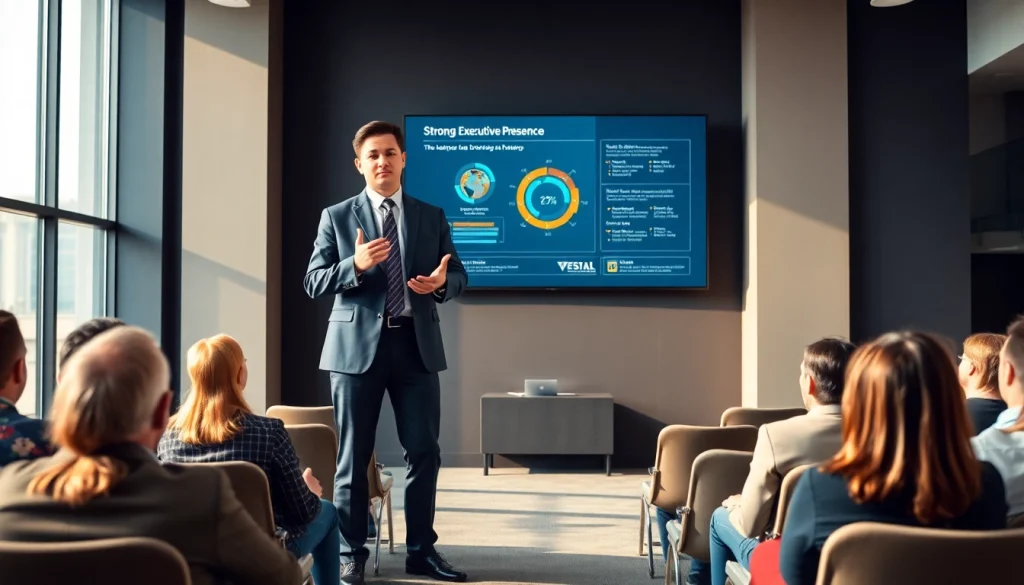
Understanding Executive Presence
Definition of Executive Presence
Executive Presence encompasses the unique set of characteristics that contribute to a leader’s ability to inspire and influence others. It is a blend of qualities such as confidence, communication skills, and interpersonal charisma, which together create an aura of authority. Leaders with strong Executive Presence are often seen as credible and trustworthy, allowing them to effectively mobilize their teams and foster a culture of engagement and productivity. The importance of cultivating this presence cannot be overstated, especially in a rapidly changing business landscape where effective leadership is critical.
Key Components of Executive Presence
Executive Presence is often broken down into three key components: appearance, communication, and gravitas. Each of these elements plays a significant role in how leaders are perceived by others.
- Appearance: The way a leader presents themselves affects first impressions. Dressing appropriately, maintaining good posture, and grooming can significantly impact how one is perceived.
- Communication: Effective verbal and non-verbal communication are paramount. Leaders who articulate their thoughts clearly and engage their audience through active listening demonstrate strong Executive Presence.
- Gravitas: This refers to the depth of character a leader exudes. Leaders who possess gravitas are calm under pressure, can navigate challenging situations, and command respect.
Why Executive Presence Matters
Having a strong Executive Presence is essential for multiple reasons. It facilitates trust and respect among team members, which are crucial for fostering collaboration and creativity. Additionally, leaders who exhibit powerful Executive Presence are more likely to influence decisions and motivate others. In essence, cultivating this presence can lead to enhanced leadership effectiveness, ensuring that leaders not only are heard but also valued within their organizations. Understanding the Executive Presence dynamics can lead to extensive personal and professional growth.
Developing Your Executive Presence
Self-Awareness and Authenticity
Self-awareness is the cornerstone of developing Executive Presence. Leaders must recognize their strengths and weaknesses and have a clear understanding of how their behaviors and words affect those around them. Authenticity is about being true to oneself while simultaneously adapting to the needs of others. Leaders can foster self-awareness by seeking feedback from peers and mentors, engaging in reflective practices, and being open to change. Developing authenticity allows leaders to build rapport and trust with their teams, which is integral to establishing strong relationships.
Improving Verbal and Non-Verbal Communication
Communication skills are at the heart of Executive Presence. Leaders should strive to improve both their verbal and non-verbal communication. This includes speaking clearly, using appropriate language for the audience, and being mindful of vocal tone. Non-verbal cues, such as eye contact, gestures, and facial expressions, also significantly impact how a message is received. Practicing these skills, such as through public speaking opportunities or social interactions, can help leaders become more effective communicators, ultimately enhancing their Executive Presence.
Building Confidence Through Practice
Confidence is an essential trait that accompanies a strong Executive Presence. Building confidence often requires deliberate practice. Leaders can engage in role-playing scenarios, seek out challenging assignments, and consistently push themselves out of their comfort zones. Joining public speaking groups or participating in leadership workshops can also bolster confidence levels. Further, physical presence—such as body language and posture—contributes to feelings of confidence. By practicing positive body language, leaders can not only feel more confident but also project that confidence to others.
Impact of Executive Presence in Leadership
Influence on Team Dynamics
The presence of a leader sets the stage for team dynamics. When a leader possesses strong Executive Presence, it cultivates an environment of mutual respect and collaboration. Teams are more likely to be engaged and motivated when led by individuals who exude confidence and authority. Moreover, leaders with Executive Presence can adeptly navigate conflicts and create a shared vision, fostering unity among team members. This positive impact on team dynamics ultimately leads to enhanced performance and productivity.
Enhancing Decision-Making Skills
Leaders with Executive Presence are often more decisive. They can assess situations quickly and make informed decisions that align with their organizational vision and values. Their confidence allows them to weigh options effectively, advocate for their choices, and persuade others. Furthermore, such leaders actively involve team members in decision-making processes, creating a culture where multiple perspectives are valued. This inclusion often leads to better decision-making outcomes, showcasing the direct connection between Executive Presence and leadership efficacy.
Creating a Lasting Impression
First impressions are shaped by Executive Presence. Leaders who are mindful of their presence leave a mark on stakeholders, influencing their perception of both themselves and their organizations. Whether in meetings, presentations, or networking events, a leader’s ability to exhibit command over their environment can transform interactions into fruitful connections. Employing strategies such as storytelling or mastering the art of persuasion also helps leaders create lasting impressions, thus enhancing their influence within the organization.
Executive Presence and Remote Communication
Adapting to Virtual Environments
As remote work becomes commonplace, the ability to maintain Executive Presence in virtual environments is crucial. Leaders must adapt their behaviors to ensure they resonate with their teams even from a distance. This includes understanding digital body language, maintaining a professional appearance during video calls, and effectively utilizing digital communication tools. The ability to connect with team members remotely not only strengthens relationships but also nurtures a sense of belonging, which is vital for team cohesion.
Using Technology Effectively
Technological proficiency directly contributes to Executive Presence in a remote setting. Leaders can leverage video conferencing tools, collaborative platforms, and instant messaging applications to enhance communication and engagement. Choosing the right tools to fit the team’s needs can facilitate smoother interactions and clearer messaging. Furthermore, leaders can set the tone for technology use by modeling effective behaviors, such as active participation in discussions and encouraging team members to voice their input.
Maintaining Engagement Online
Keeping a remote audience engaged is a challenge that demands innovation and creativity. Leaders should incorporate interactive elements into virtual meetings, such as polls or breakout sessions, that encourage participation and feedback. Utilizing storytelling techniques and varied presentation styles can also heighten interest. Understanding the balance between formality and approachability plays a key role in maintaining a sense of connection. Ultimately, effectively engaging an online audience enhances a leader’s Executive Presence, reinforcing their capacity to lead effectively.
Measuring the Effectiveness of Executive Presence
Feedback and Assessment Techniques
Measuring Executive Presence involves both self-assessment and feedback from others. Leaders can utilize peer reviews, mentorship sessions, and structured feedback mechanisms to gauge their presence. Tools such as 360-degree feedback can provide insights into how one is perceived in various settings. Reflecting on this feedback helps leaders identify areas for improvement and tailor their development efforts accordingly. Continuous feedback fosters a growth mindset, enabling leaders to evolve their Executive Presence over time.
Setting Personal Goals
Establishing personal goals is essential for the development of Executive Presence. Leaders should pinpoint specific areas where improvement is desired, be it in communication skills, presence during meetings, or improving team dynamics. Creating measurable and attainable goals provides clear benchmarks for progress. Regular reflection on these goals allows leaders to adjust their strategies and maintain accountability, ensuring they are on a path toward enhancing their overall presence.
Benchmarking Against Industry Standards
Leaders can gauge their Executive Presence effectiveness by comparing themselves against industry standards. Understanding what outstanding Executive Presence looks like in their field can motivate leaders to strive for excellence. Industry benchmarks often provide insights into the behaviors of successful leaders, aiding in the identification of best practices. Engaging with leadership communities or participating in industry conferences can also offer additional perspectives for growth and self-improvement.
FAQs
What is Executive Presence?
Executive presence refers to the ability to project confidence, gravitas, and charisma, inspiring trust and respect from others.
How can I improve my Executive Presence?
Improving Executive Presence involves enhancing communication skills, being mindful of body language, and fostering self-awareness.
Why is Executive Presence important for leaders?
Executive Presence is vital for leaders as it impacts how they are perceived, influences team morale, and plays a role in decision-making.
Can Executive Presence be developed?
Yes, Executive Presence can be developed through practice, feedback, and continuous personal and professional growth.
What are common misconceptions about Executive Presence?
A common misconception is that Executive Presence is solely about appearance; it also encompasses communication, confidence, and emotional intelligence.